ServicesFillings
Fillings in West Boylston
A small cavity is the cheapest problem a tooth will ever have. We clean out the decay, seal the tooth with a tooth-colored filling and tell you plainly how long it should last and what keeps it that way.
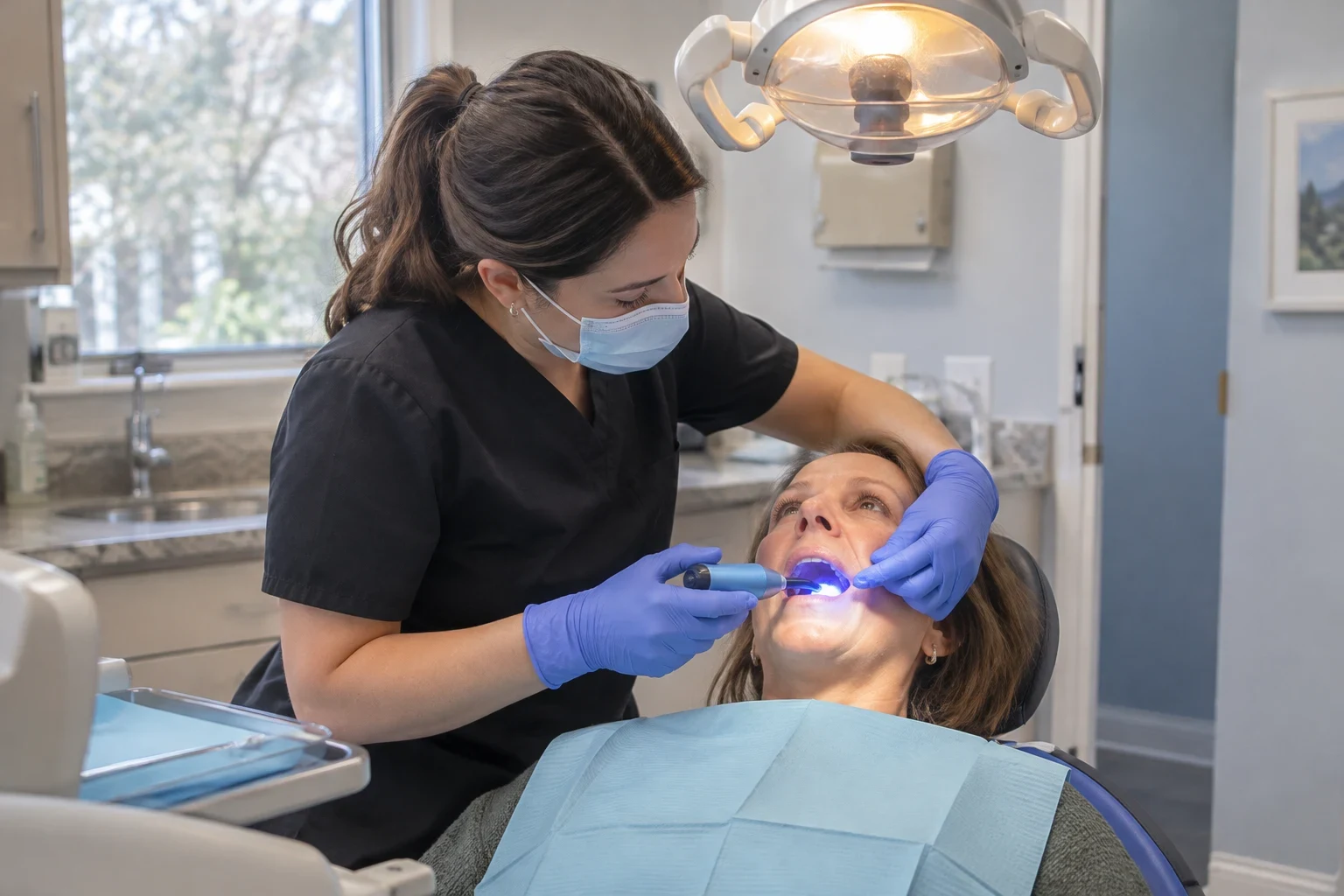
Fix the Cavity While It Is Still Small
Decay leaves a soft, weak spot in a tooth. A filling takes its place. We clear out the damaged part, shape the healthy tooth around it, and bond in a material that closes the gap so you can chew normally again.
Timing matters more than anything else here. A cavity caught early needs a small filling that can last a long time. Left alone, decay spreads under the enamel, and the same tooth may need a large filling, a crown or a root canal. Those cost more up front and take more upkeep later.
So we look at the whole picture with you. Sometimes a filling is the right answer. Sometimes a tooth is too broken down for one, and we will say so and explain why a crown may hold up better over the years.
What Your Filling Visit Includes
- Seeing the damage before we treat it
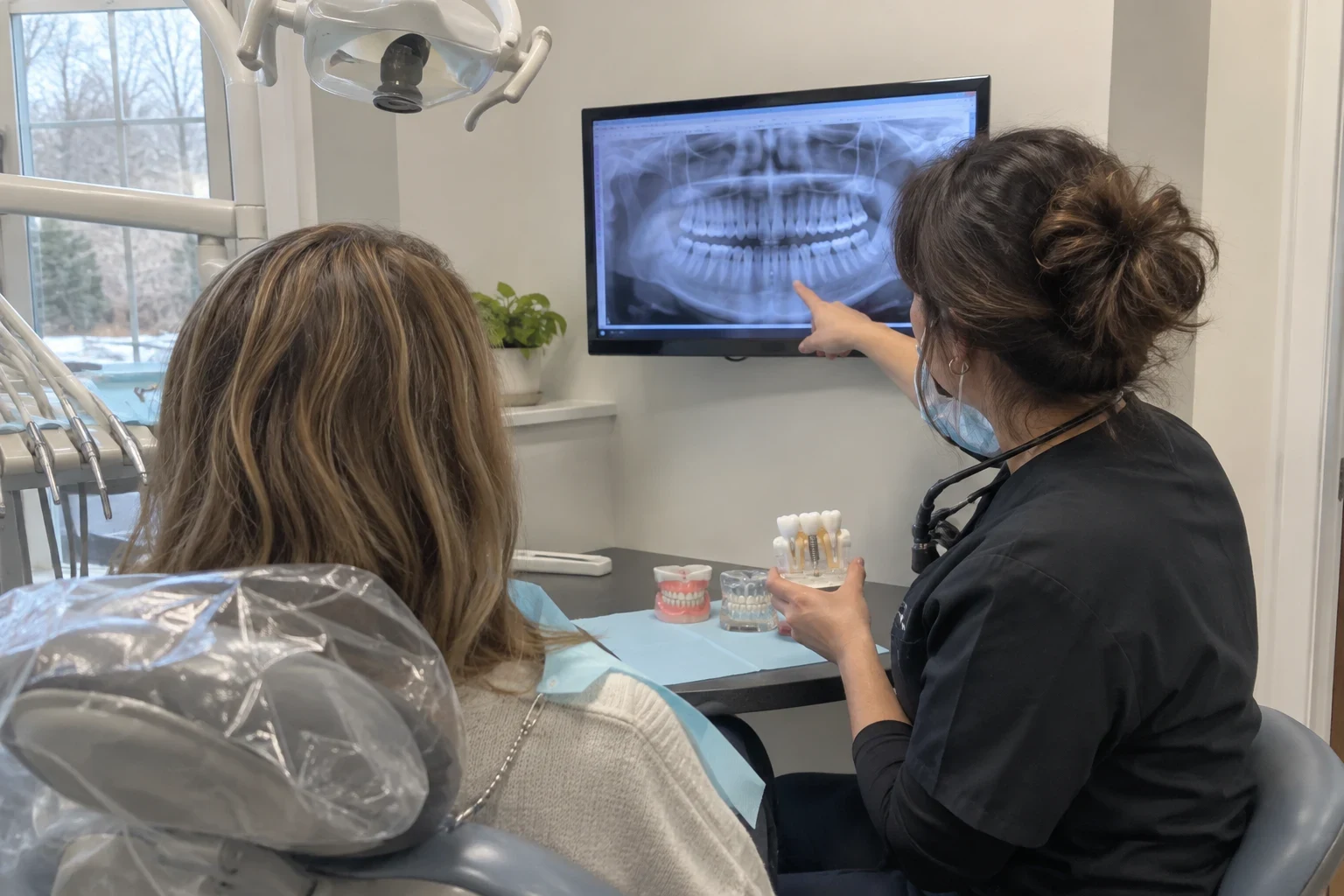
- First we examine the tooth, with X-rays when they are needed. The images go up on the screen for you too, so the depth of the decay is no mystery.
- Tooth-colored composite
- Most of our fillings are composite resin matched to the shade of your tooth. Because it bonds to the tooth, we can often save more healthy enamel than older methods allowed.
- Numbing that is done right
- We numb the area and give it time to fully set before starting. If you feel anything, say so and we pause.
- Bite check and polish
- Before you go, you bite on marking paper and we smooth away any high spots. A filling that sits even a little tall can keep a tooth sore for weeks, so this step gets our full attention.
- Replacing old fillings
- Older fillings can crack, leak around the edges or separate from the tooth. We swap them out when something is actually wrong, not just because of their age.
Signs a Tooth May Need a Filling
Sharp twinge with sweets or cold
A quick zing when you eat candy or drink something cold often means decay has reached past the enamel.
Food catching in the same spot
If floss shreds or food keeps packing between two teeth, there may be a hole or a broken edge you cannot see.
A rough edge your tongue keeps finding
A chipped tooth or a cracked old filling feels sharp or jagged. Getting it smoothed and sealed early keeps the crack from spreading.
Dark spots or a gray shadow
Brown or gray areas on a tooth, or a shadow around an old metal filling, can mean decay underneath.
Pain when you bite down
Soreness when chewing can point to a deep cavity or a cracked filling. It is worth a look before it turns into a bigger repair.
What Moves the Cost of a Filling
Two things set most of the price: which tooth needs work and how much of it is damaged. We give you the number before any work starts. We accept most dental insurance plans, and patients with no coverage can use our Office Dental Plan for patients without insurance or spread payments out with the CareCredit Patient Payment Plan.
Number of surfaces
A tooth has several sides. Filling one side is a smaller job than a filling that wraps across two or three, and the price follows that.
Front or back tooth
Molars handle the heavy chewing and sit deep in the mouth. That can change the material we choose and how long the visit runs.
How deep the decay goes
Decay that sits close to the nerve may call for a protective liner under the filling. If it reaches deeper than that, the plan may change to a crown or another treatment.
Your insurance coverage
Many plans cover a set share of a filling after the deductible is met. We can go over what your plan is likely to pay.
How a Filling Appointment Goes
- 1
Exam and plan
We check the tooth, show you the X-ray and explain your options. You hear what it should cost before we begin.
- 2
Numbing
We use a numbing gel first, then the injection. Most patients say the gel makes the shot easy to handle.
- 3
Remove decay and fill
We clean out the decay and place the composite in thin layers, hardening each one with a curing light. Most single fillings take well under an hour.
- 4
Shape, check and go
We shape the filling to fit your bite and polish it smooth. You can eat once the numbness wears off, and we will tell you what to expect for the next day or two.
Filling Questions We Hear Often
How long will my filling last?
A few things decide that: how big the filling is, which tooth holds it and how well you keep it clean. A small filling on a tooth you brush and floss can go for many years. Big fillings on molars wear sooner because they take the most chewing force. We will give you a straight answer for your tooth.
Should I get a filling or a crown?
If enough healthy tooth is left, a filling is the simpler and cheaper choice. When a filling would make up most of the tooth, the tooth can crack around it. In that case a crown costs more now but often holds up better over time. Our Crowns & Bridges page covers that option.
Do you replace old silver fillings?
Yes, when there is a reason to. If an old metal filling is cracked, leaking or has decay under it, we replace it with tooth-colored material. If it is sound, we usually leave it alone and keep an eye on it at your Exams & Cleanings visits.
Will my tooth be sensitive afterward?
Some mild sensitivity to cold or biting for a few days is normal, especially with deeper fillings. It should fade. If it gets worse or your bite feels off, let us know and we will check it.
Can my child get a filling here?
Yes. We fill cavities for kids too and take extra time to keep them comfortable. Our Kids' Dentistry page explains how we handle young patients.
Get That Cavity Taken Care of
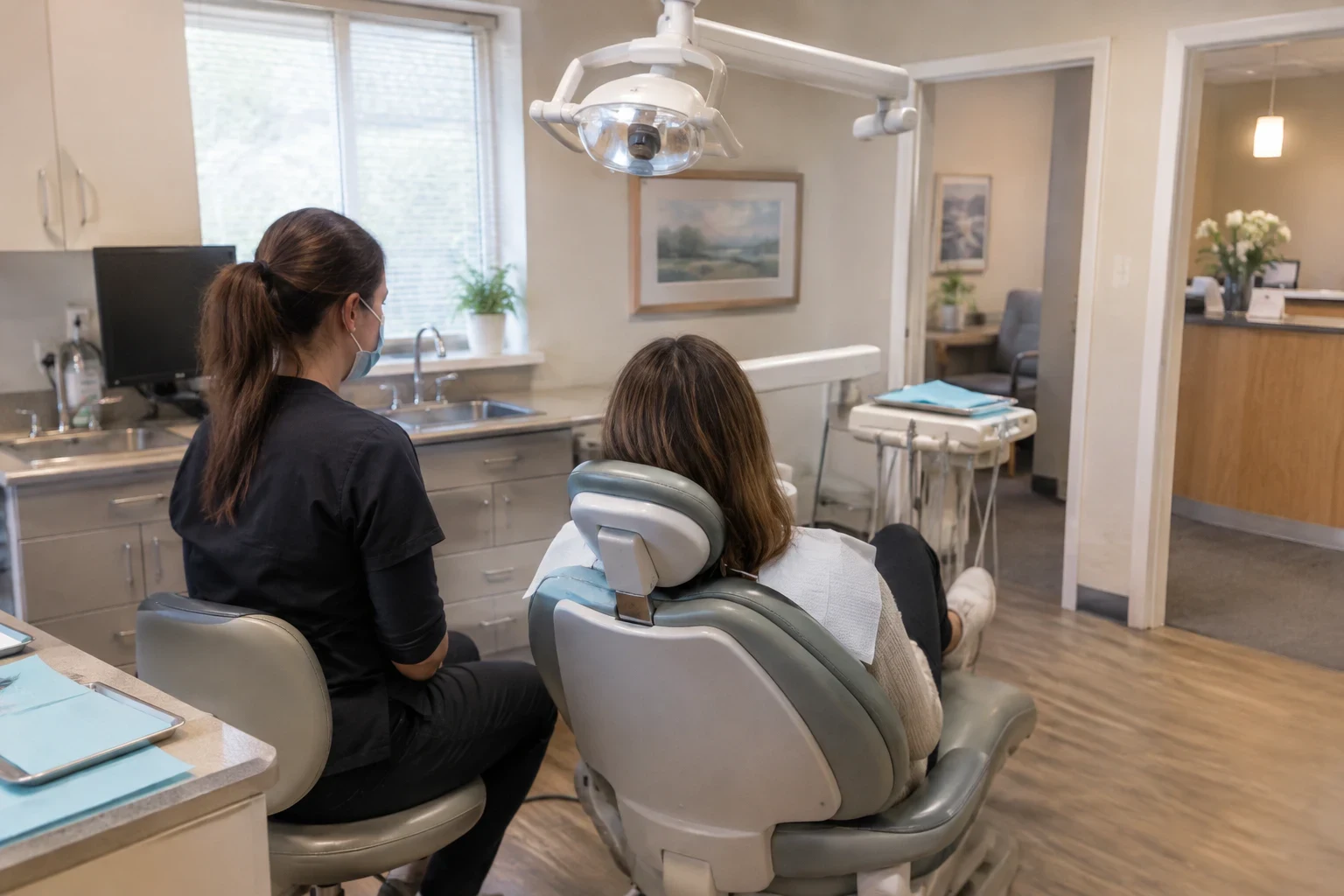
Fixing a small cavity now costs less than fixing a broken tooth down the road. Pick up the phone and we will set an appointment around your schedule.