ServicesExtractions
Tooth Extractions in West Boylston
Some teeth are worth saving and some are not. We look at the tooth, show you what we see, and tell you plainly which way makes sense. If it has to come out, we numb it well, work gently, and plan for what happens next.

When Pulling a Tooth Is the Right Call
An extraction is cheap up front. The real cost shows up later, when the gap lets nearby teeth drift or the opposite tooth grows down into the space. So before we pull anything, we weigh what it costs to keep the tooth against what it costs to replace it.
Sometimes a filling or a crown buys a tooth many more years, and that is the better deal. Other times the tooth is cracked below the gum, too broken down to hold a crown, or crowding a wisdom tooth into trouble. Then taking it out is the smart move, and we say so.
Either way, you leave knowing why, and what the space will need down the road.
What Your Extraction Visit Covers
Exam and X-ray
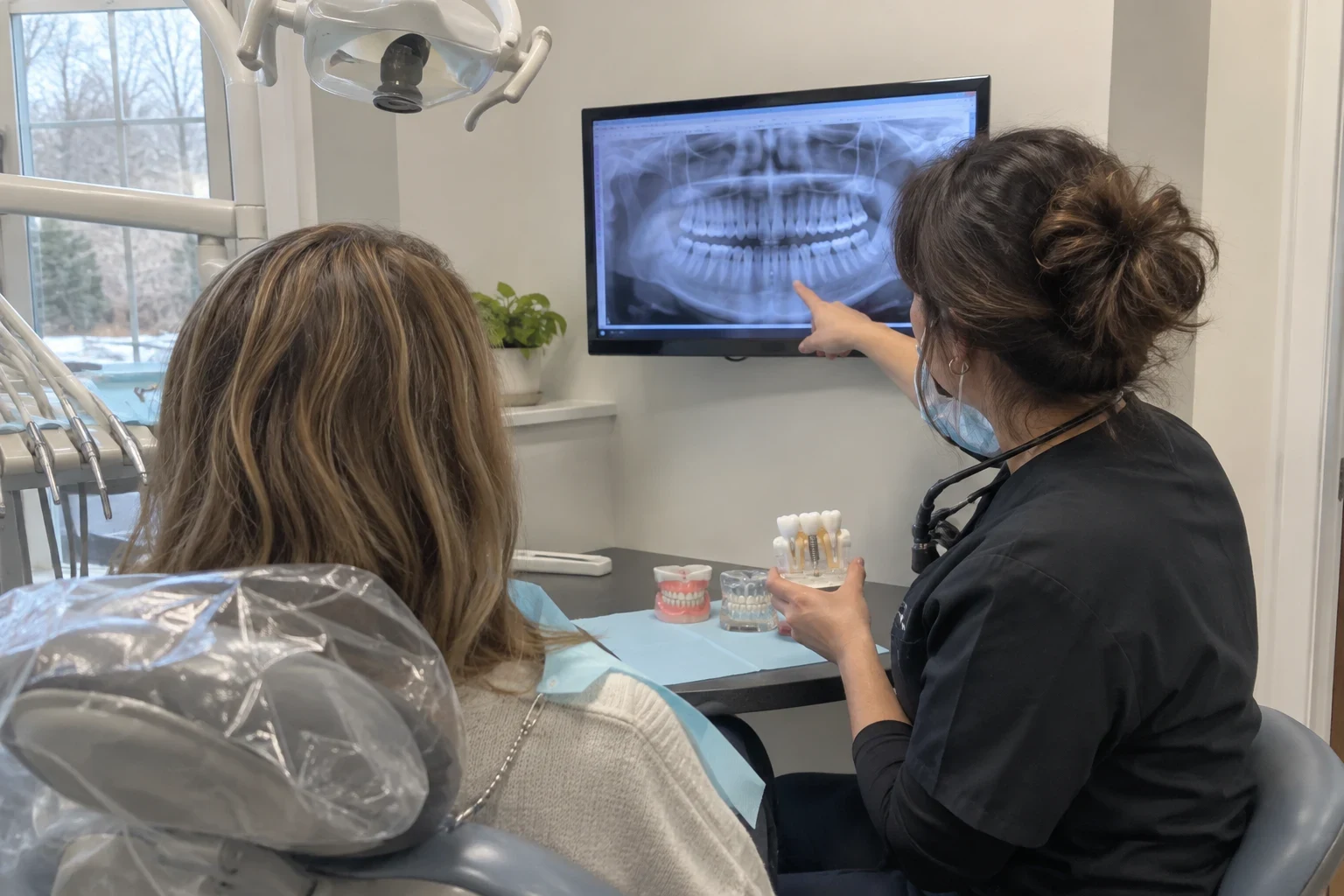
We check the tooth, its roots and the bone around it. The X-ray shows root shape and how close the tooth sits to a nerve or the sinus, so we know up front whether the removal is simple or involved.
A straight answer on saving it
If a filling or a crown could keep the tooth working, we put that option next to the extraction. You see both, plus what each one costs to maintain over the years.
Numbing that actually works
We use a local anesthetic and wait until it has fully set in before we begin. Feeling pressure is normal. Feeling sharp pain is not, so tell us and we stop right away.
Gentle removal
We loosen the tooth bit by bit instead of forcing it. That protects the bone and gum around it, which matters if you pick a bridge for that spot later.
Written aftercare
Before you go, we hand you printed steps for the first few days. They cover what to eat, how to keep the clot in place, and which symptoms are worth a phone call to our office.
Thinking ahead about the space
Not every gap needs filling. A back molar with no tooth biting against it may be fine open for good. A front tooth, or one that carries your bite, usually is not. We cover a bridge and other choices today so the later costs don't catch you off guard.
Signs It Might Be Time for an Extraction
- A split that reaches the root
- A crack that ends before it reaches the gum can often be held together with a crown. Once the break runs down into the root, the tooth can rarely be kept.
- Decay that has eaten most of the tooth
- When there is too little sound tooth left to anchor a filling or crown, repairs tend to fail fast. Over a few years they can add up to more than removing the tooth.
- Wisdom teeth causing trouble
- Swollen gum behind your last molar, a bad taste, or soreness when you open wide can mean a wisdom tooth is stuck or trapping food. If the same tooth keeps flaring up, taking it out often makes more sense than waiting.
- A loose adult tooth
- Long-running gum disease can wear down the bone that holds a tooth in place. If a tooth moves when you chew, have us take a look.
- Crowding before aligners
- Once in a while, a tooth has to come out so the rest have room to straighten. We only suggest this when the extra space is truly needed for the result.
What Happens at Your Extraction Visit
- 1
Health history first
Before anything else, we ask about your health and the medicines you take, blood thinners in particular. We pull up the X-ray, walk through it with you and settle the plan.
- 2
Numb the area
We numb the tooth and the gum next to it, then wait for it to set in fully. With most simple extractions, the removal happens at this same visit.
- 3
Remove the tooth
Using slow, even pressure, we work the tooth free. If the roots are curved or the tooth breaks, it may come out in pieces, and we tell you that before we start.
- 4
Gauze, instructions, and home
You bite down on gauze so a clot can form. Expect soft food and a quiet evening. Most people are back to work and their usual routine within a day or two.
What Moves the Cost of an Extraction
The simpler, lower-cost case is a tooth that sits fully above the gum and comes out in one piece. A surgical removal takes more time and more steps. Before we start, you hear the price for your own tooth. We accept most dental insurance plans. If you have no coverage, our office offers an Office Dental Plan for patients without insurance, and payments can also be spread out through the CareCredit Patient Payment Plan.
- Simple or surgical
- When the tooth lifts out whole, the visit is short. A tooth that has broken off at the gum or never fully came in takes more work to reach and remove.
- Root shape and position
- Long, hooked or fused roots need slower, more careful work so the bone stays intact. A tooth sitting near the sinus or a nerve also needs extra planning.
- How many teeth
- Removing several teeth in one sitting, such as a full set of wisdom teeth, raises the total. It can also save you return trips and extra days of healing.
- What goes in the gap
- People often forget this part of the cost. A bridge later on is billed separately, so we talk it through now and you see the full picture before you decide.
Extraction Questions We Hear Often
- Will it hurt?
- Once the numbing takes hold, you should feel pushing but nothing sharp. The spot will be sore for a few days after. Most people do fine with over-the-counter pain relief, and we tell you which kind is safe with your other medicines.
- Is it cheaper to just pull the tooth?
- On the day itself, it usually is. Over the next several years, maybe not. An open space can let the teeth beside it tip over, and you may end up wanting a bridge. We put both costs side by side so your choice still makes sense later.
- What can I eat afterward?
- For the first day or two, keep to soft things that need little chewing, such as mashed potatoes, applesauce, pudding or lukewarm broth. Don't use a straw or smoke, because the suction can dislodge the clot. Chew with the other side of your mouth while it heals.
- Do I have to replace the missing tooth?
- Not in every case. It comes down to where the tooth was and how your upper and lower teeth meet. We will tell you straight if the space can stay open and when it really should not.
- How long until it heals?
- The gum generally closes within one to two weeks. The bone below keeps rebuilding for a good while longer. Most people feel back to normal long before that, and if something seems off, give us a call.

Talk Through That Tooth With Us
Bring your questions about the tooth that's bothering you. We will look, explain your choices, and get you scheduled. Patients come to us from Holden, Sterling and nearby towns.